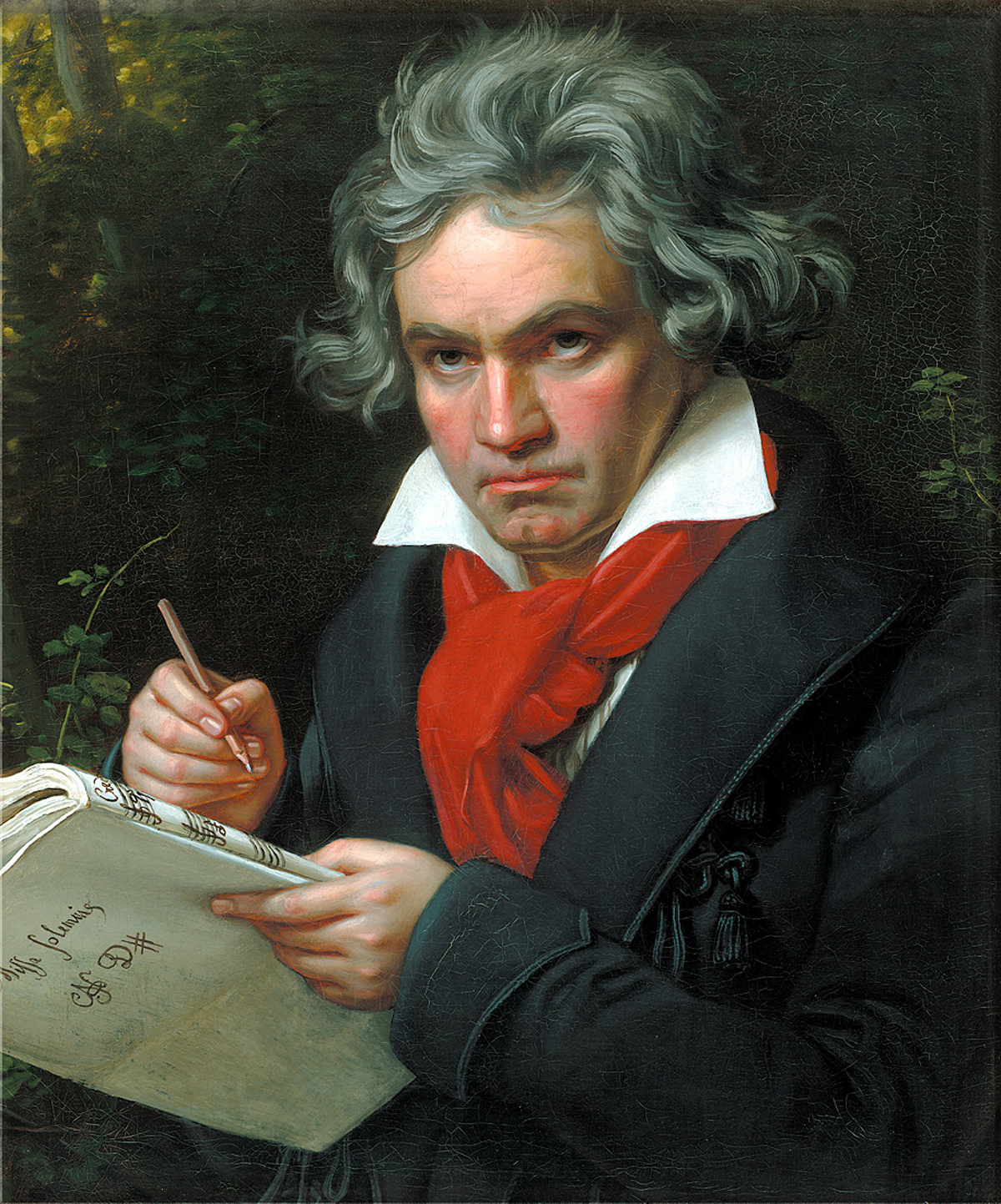
Beethoven had severe mood disorders which limited and damaged, but also helped his career. This mood disorder caused him to abuse his son, while trying to exploit his son's potential in music. In 1813, he even attempted to commit suicide but failed and returned three days later.
The severe mood disorders may have came from his father's alcoholism severe penalties, and loud, harsh teachings when Beethoven wouldn’t understand. When Beethoven wanted to play music with Mozart, Mozart had already died a year earlier. Practically every goal, every dream of his, was obliterated; Beethoven's unfortunate life hit him hard and left him unstable, leading to a mood disorder.
Beethoven's disorder also helped him sometimes. This mood disorder also brought random intervals of happiness to Beethoven. Most likely, without these spasms of happiness, Beethoven would not have had any desire to live any longer than he did. This also stimulated his creative side which allowed him to compose the wonderful works he made throughout his lifetime.
This disorder destroyed Beethoven's relationships. One time, he even through a platter of food at a waiter's head; his friends even agreed that when angry, Beethoven would become like a savage beast. Beethoven had to constantly drink alchohol in order to satisfy himself. Since opium was the only other drug available to him, Beethoven had to rely on alchohol so much that it would eventually destroy his liver and kill in early 1827 at the age of 56.
